Matthew 23:13
They shut the reign of Heaven before men. Their authority did not merely mislead the teacher; it blocked other people.
Pharisee Doctrine
Yeshua warned that Pharisaic tradition could transgress and nullify Elohim’s command. He called their teaching leaven, their leaders blind guides, and their outward righteousness a covering for hypocrisy and lawlessness.
The issue is religious authority, not ancestry. This page judges the doctrine by its record and its fruit.
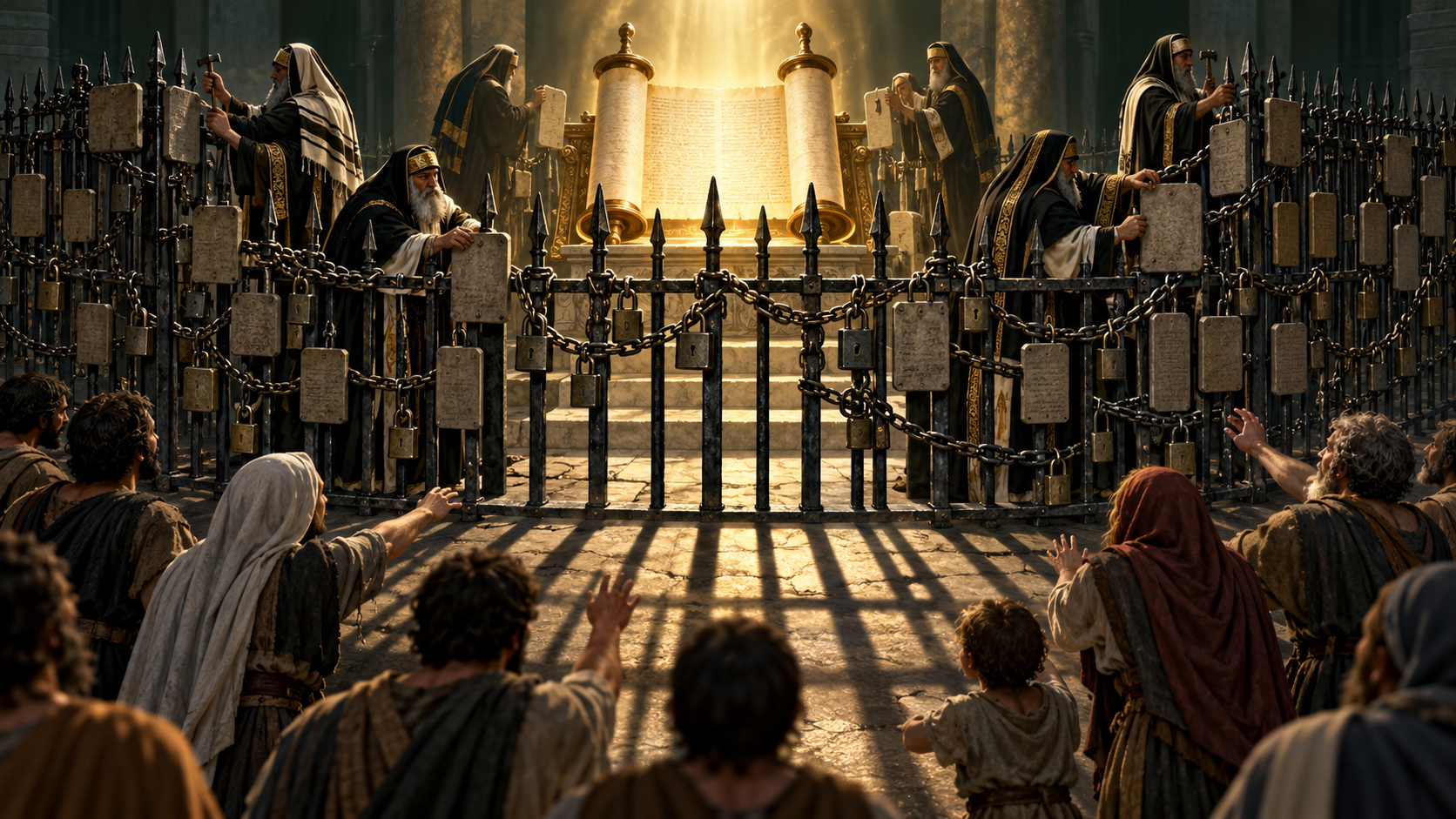
The written boundary
“You shall not add to the word I command you, and you shall not take away from it, so you may keep the commandments of יהוה your Elah that I command you.”
Deuteronomy 4:2 — The Hebrew
“Every word I command you, you shall guard to do it. You shall not add to it or diminish from it.”
Deuteronomy 12:32 in common English numbering; 13:1 in The Hebrew
A tradition does not become Torah because generations of teachers repeat it. A fence does not become a commandment because a court enforces it. No rabbi, council, pastor, scholar, or institution may add to the law, subtract from it, or make its own rulings equal to the written Word.
Yeshua’s verdict
“Unless your righteousness exceeds that of the scribes and Pharisees, you shall by no means enter into the reign of the heavens.”
Matthew 5:20 — TS2009
“Why do you also transgress the command of Elohim because of your tradition?”
Matthew 15:3 — The Hebrew
“You have nullified the command of Elohim by your tradition.”
Matthew 15:6 — The Hebrew
“In vain do they worship Me, teaching as teachings the commands of men.”
Matthew 15:9 — The Hebrew
“Then they understood that He did not say to beware of the leaven of bread, but of the teaching of the Pharisees and Sadducees.”
Matthew 16:12 — TS2009
This is the charge. Their doctrine did not merely explain Torah. It created another authority that could cause a command to be transgressed and nullified. Once human rulings are allowed to govern Scripture, every command becomes subject to the institution that interprets it.
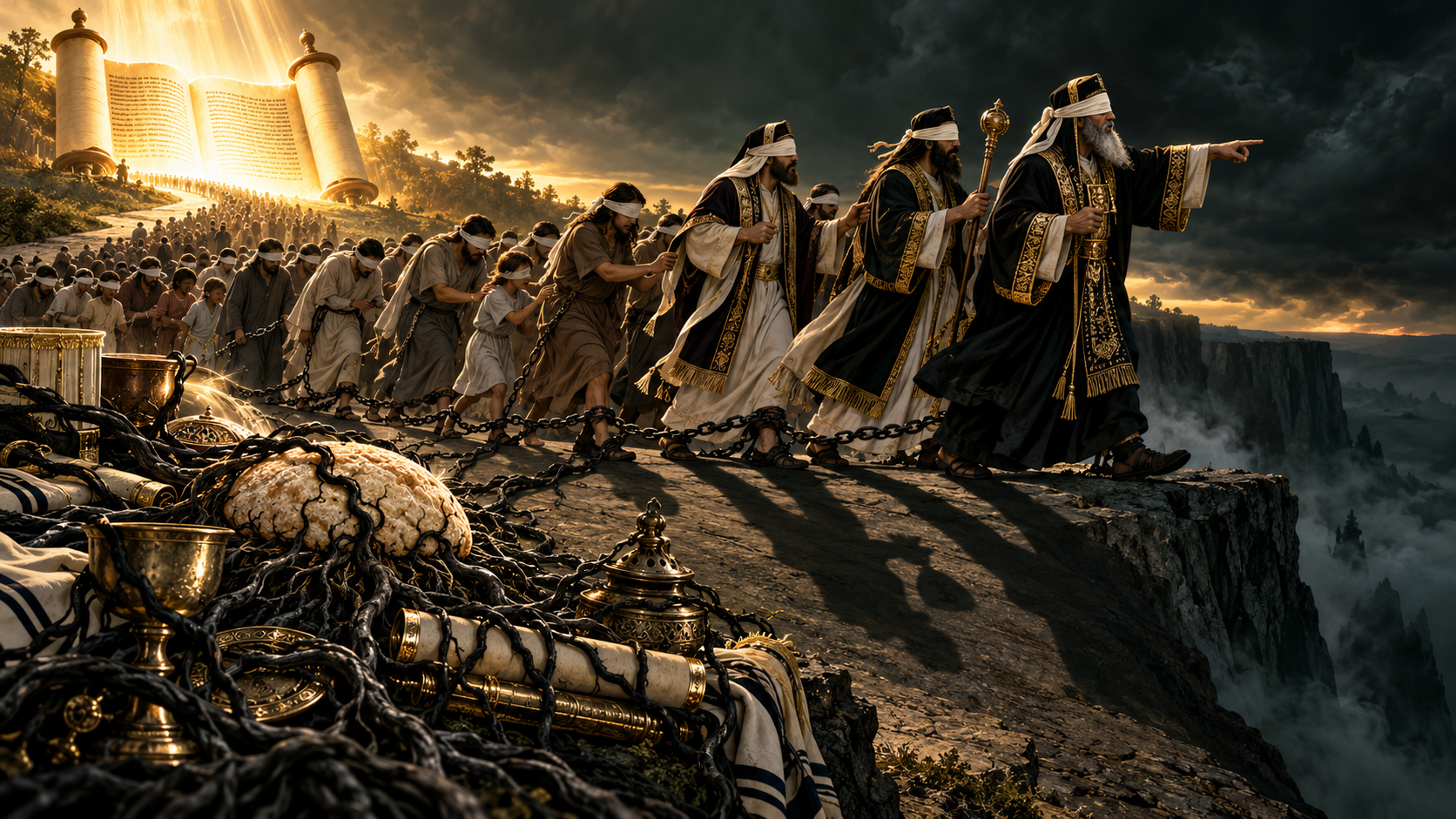
Recorded fruit
They shut the reign of Heaven before men. Their authority did not merely mislead the teacher; it blocked other people.
They traveled to make converts and then made them worse. Zeal and expansion did not prove the doctrine was true.
Yeshua called them blind guides. Their claim to superior religious sight did not protect them from blindness.
They focused on detailed observance while neglecting the weightier matters of Torah: judgment, compassion, and belief.
They appeared righteous outside while being filled with hypocrisy and lawlessness inside.
Yeshua called them serpents and offspring of adders and asked how they would escape the judgment of Gehenna.
“This crowd that does not know the Torah is accursed.”
John 7:49 — TS2009
They claimed the common people did not know Torah. In John 9:40–41, Pharisees asked whether they were blind. Yeshua answered that because they claimed to see, their sin remained. John 12:42–43 records rulers who believed in Yeshua but hid it because they feared the Pharisees and loved the praise of men. The doctrine produced contempt, fear, and enforced silence.
Revelation 2:9 and 3:9 record the risen Yeshua condemning specified opponents in Smyrna and Philadelphia who claimed covenant identity while opposing His people. He called them a congregation of Satan. A religious title does not prove faithfulness. Doctrine and conduct expose the authority being served.
The authority line
The Pharisees did not limit religious law to what Moses wrote. About 93 CE, Josephus reported that they passed down “observances by succession from their fathers” that were “not written in the laws of Moses” (Antiquities 13.297–298).
The line is direct: Pharisaic ancestral tradition became rabbinic oral law; rabbinic oral law was organized in the Mishnah; discussion of the Mishnah became the Gemara; Mishnah and Gemara became the Talmuds. The Pharisees passed down the doctrine. Their religious descendants and rabbinic heirs wrote it, expanded it, and preserved it. The name of the institution changed. The central claim did not: human rulings may govern what Elohim wrote.
Talmud readers read Pharisaic doctrine. Talmud students study Pharisaic doctrine. Talmud rabbis teach Pharisaic doctrine. Historically and doctrinally, they are modern-day Pharisees.
The record preserved
The Talmud does not merely disagree with Yeshua. Its hostile traditions attack His works, His teaching, His birth, His Name, and even His condition after death.
It accuses Yeshua of sorcery and of enticing and leading Yisrael astray, then presents His execution on the eve of Passover as the penalty.
They portray Yeshua as a rejected and rebellious disciple who practiced magic, turned to idolatry, and caused Yisrael to sin.
The Ben Stada and Ben Pandera tradition accuses Him of bringing magic from Egypt and attaches sexual-unfaithfulness claims to Miriam and His birth.
It portrays Yeshua the Nazarene as an enemy of the sages and describes Him after death under the degrading punishment of boiling excrement.
They treat teaching delivered in Yeshua’s Name as heresy and healing in His Name as forbidden, even in a life-threatening case.
It uses Yeshua the Nazarene as the example of a corrupt public sinner who caused other people to sin.
These are not harmless historical notes. They are a sustained religious attack. Signs become sorcery. Truth becomes deception. Yeshua’s teaching becomes heresy. Healing in His Name becomes forbidden. Miriam is slandered. Yeshua is pictured under degrading punishment after death. The tradition that claimed superior knowledge of Torah preserved contempt for the One who exposed its hypocrisy and commanded His followers to beware of its leaven.
A religious book that attacks Yeshua cannot be received as inspired authority by those who follow Yeshua.
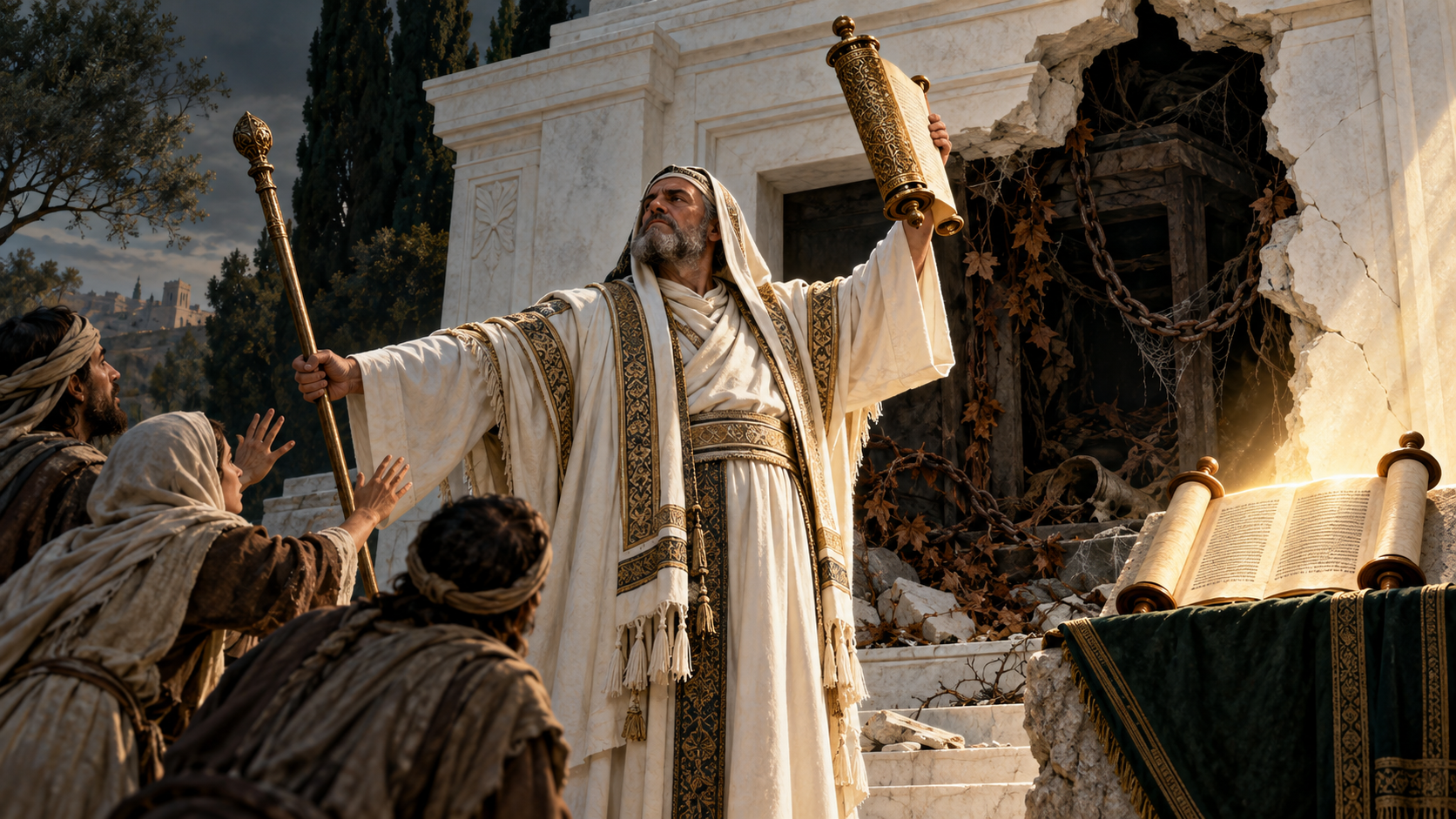
The appearance of righteousness
“Outside indeed you appear righteous to men, but inside you are filled with hypocrisy and lawlessness.”
Matthew 23:28 — TS2009
The claim to guard Torah does not prove obedience to Torah. Yeshua judged the system by what it produced: commands of men replacing the command of Elohim, leaders claiming sight while remaining blind, and outward righteousness concealing lawlessness.
The letters came first
The Hebrew consonants came first. The familiar Masoretic vowel-point systems came centuries later.
Written pointing systems appear after about 500 CE. The Tiberian system used in most printed Hebrew Bibles developed during the second half of the first millennium and was largely fixed by about 1000 CE. The Cairo Prophets Codex dates to 895 or 896, the Aleppo Codex to the tenth century, and the Leningrad Codex to 1008 or 1009.
The Masoretes worked inside a learned rabbinic world already shaped by the Mishnah and Talmuds. As religious heirs of the Pharisaic-rabbinic authority line, they placed vowels, cantillation marks, marginal readings, and a received pronunciation tradition around the older consonantal text. They did not need to erase a consonant to control how later generations pronounced, divided, and understood the letters.
Written one way. Read another.
Ketiv means what is written. Qere means what is to be read. The consonants can preserve one form while the notes and pointing instruct the reader to pronounce another.
The written Name
The four consonants remain written, but the received reading tradition directs the reader to substitute Adonai, a title. The page displays יהוה while the reader is trained to say something else.
One spelling. Multiple readings.
The same four written letters support both readings. Later points distinguish them, but they do not create two different consonantal entries.
The eye is directed
Spaces, the maqaf, punctuation, chapter numbers, and verse numbers guide grouping and pauses. None of them is a Hebrew consonant.
“A Hebrew concordance entry is identified by its written consonantal letters in their original order.”
“Vowel points, cantillation, spacing, maqaf, and punctuation do not create a new entry.”
The Hebrew Concordance StandardThe rule is simple: the points and divisions may serve the consonants; they may never rule them. They may preserve evidence, but they may not erase a reading supported by the written letters, replace the written Name with a title, or force Torah to conform to later doctrine. The Hebrew letters are Scripture. The later reading system is interpretation.
The doctrine did not disappear
This is the direct institutional home of Mishnah, Talmud, later rabbinic decisions, and halakhic law. Their authority is strongest in Orthodox and Haredi Judaism. Conservative Judaism preserves an authoritative but developing halakhic system. Other Jewish movements study the same literature while assigning it different levels of authority.
The leaven appears wherever rabbinic calendars, rulings, blessings, pronunciations, or customs are treated as though Moses commanded them.
Christianity is not Talmudic, but the same authority error appears when church tradition, councils, clergy, denominations, or Pauline interpretation are allowed to cancel commandments that Yeshua upheld.
Does Scripture rule the tradition, or does the tradition rule Scripture? Wherever human authority nullifies the written command, Pharisee doctrine is operating.
Source trail
Scripture: Deuteronomy 4:2; 12:32/13:1; Matthew 5:20; 15:1–9; 16:12; 23:13–33; John 7:49; 9:39–41; 12:42–43; Revelation 2:8–9; 3:7–9.
Historical sources: Josephus, Antiquities 13.297–298; Mishnah Avot 1:1; Mishnah, Gemara, Jerusalem Talmud, and Babylonian Talmud compilation history.
Rabbinic passages: Babylonian Talmud, Sanhedrin 43a, 67a, 107b; Sotah 47a; Shabbat 104b; Gittin 57a; Avodah Zarah 16b–17a, 27b; Berakhot 17b.
Text and reading: Cairo Prophets Codex; Aleppo Codex; Leningrad Codex; Ketiv and Qere; the Adonai substitution for יהוה; The Hebrew Concordance Standard.
Remove the leaven
Yeshua did not tell His disciples to absorb Pharisee teaching carefully. He told them to beware of it. Reject every religious rule that cannot survive the written Word.
Remove the leaven. Follow Yeshua rather than the commands of men.